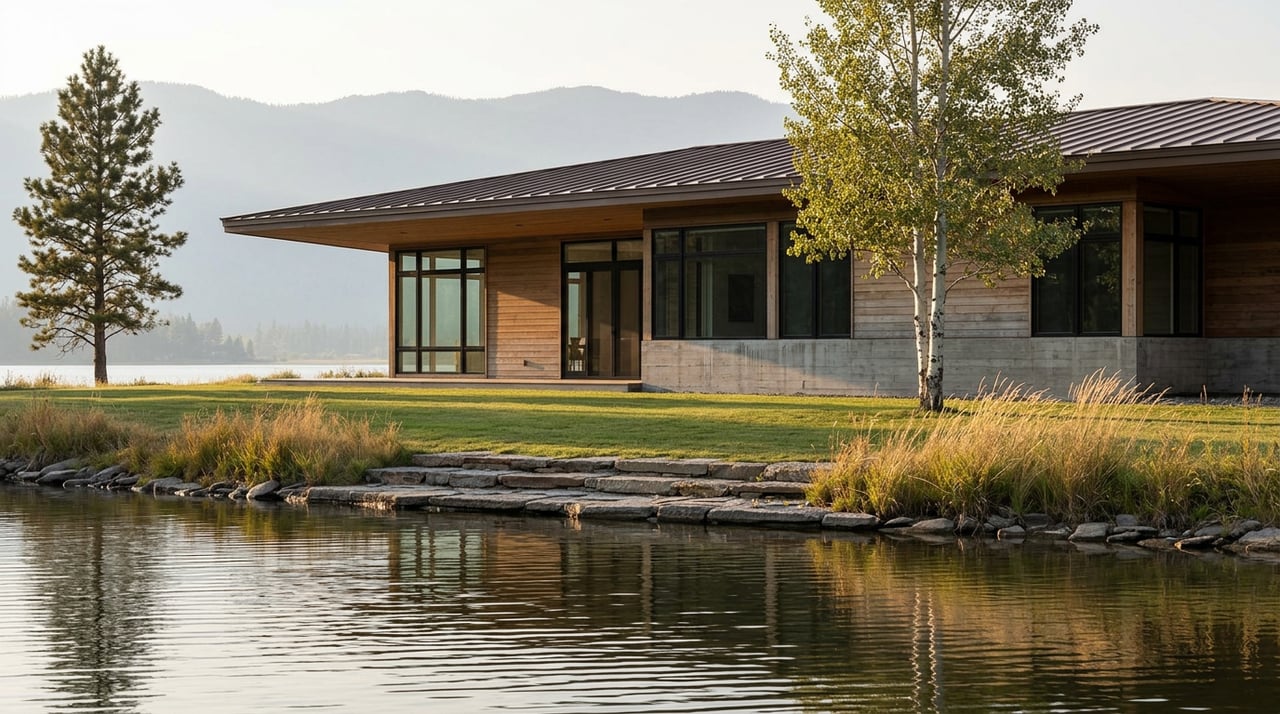
Andy and Trinity Warner have lived on Lake Loveland for 35 years. In the spring of 2025, the couple watched their backyard turn into something neither of them recognized. The bank below their dock went bone dry. Boating and kayaking stopped being an option. Then Colorado Parks and Wildlife found roughly 500 dead fish clustered in an inlet, most likely killed by water levels that had fallen further than anyone on the lake was used to seeing.
If you're pricing a home on Lake Loveland or Boyd Lake right now, that story matters more than the listing photo. Because the photo was almost certainly taken when the lake looked full, and the lake does not stay full on its own. It stays full when an irrigation company decides there's water to spare, and lately there's been less to spare.
The lake has an owner, and it isn't the city or the HOA
Lake Loveland and Boyd Lake are managed by the Greeley Loveland Irrigation Company, known locally as GLIC, a shareholder-owned company that has operated continuously since 1900. GLIC didn't build these reservoirs for boating. It built them to move water from the Big Thompson River to farms and to the cities of Greeley and Evans, both of which hold ownership shares in the system. Recreation happens on the lake because the lake happens to be there, not because recreation is the reason it exists.
That distinction shows up the moment water gets scarce. In spring 2025, Leah Hubbard, deputy director of water resources for the City of Greeley, explained to Denver7 why the lake was dropping: a light snowpack meant a smaller spring fill, and once irrigators along the Big Thompson start pulling water for corn and other crops, the level falls further. She put it plainly: the lake is designed to be drained. Recreation is what's left over after agriculture and municipal supply take their share, not the other way around.
Lake Loveland's own water right underscores the pecking order. It carries decree #9 on the Big Thompson River, meaning eight more senior reservoirs have to fill before a drop reaches Lake Loveland. In a below-average year, "last in line" is exactly where you don't want your view to depend on the outcome.
The buffer that used to hide this from buyers
For decades, this pecking order rarely showed up as a visible problem, because a separate agreement was quietly smoothing it over. Starting in the mid-1980s, Greeley stored 5,000 acre-feet of Colorado Big Thompson water in Lake Loveland every September and October. Against the reservoir's total capacity of 12,736 acre-feet, that alone guaranteed the lake stayed at least 40 percent full, and in most years there was water left over from the irrigation season on top of it. GLIC's own account of the system puts winter capacity in that era at 80 to 90 percent full more often than not.
In 2018, Northern Water changed the rule that made this possible. CBT water could no longer be stored in a given year unless it was also released and used that same year, which meant Greeley could no longer bank the full 5,000 acre-feet each fall the way it had for three decades. GLIC now brings in much smaller amounts, sized to what's actually needed, and the practical effect is what the Warners and their neighbors experienced in spring 2025: winter and early-season water levels that run consistently lower than they did for most of the lake's modern history.
This is the part a listing photo can't show and a June showing won't reveal. A house that looked lakefront in every way when the sellers bought it a decade ago may sit above a much thinner pool by the time you're the one paying a premium for the view.
What this actually changes for a buyer
None of this means Lake Loveland or Boyd Lake properties are a bad purchase. It means the premium you're pricing in is a premium for adjacency to working infrastructure, not a guarantee of stable recreation. Before you write an offer on anything marketed as lakefront in this system, it's worth getting specific answers to a few questions that a general market comparison won't surface:
- Does the parcel itself carry a recorded easement or deeded right to the shoreline and dock, or is water access simply the current owner's informal use of adjacent land
- Who actually owns and maintains the dock, and does that ownership transfer with the sale or require separate arrangement with GLIC or a homeowners association
- Has the seller experienced a season with visibly low water, and if so, how did it affect daily use of the property
- Is the specific reservoir subject to the same CBT storage limitation that now affects Lake Loveland, since Boyd Lake and the smaller lakes in the Seven Lakes system aren't identical in how they're supplied
- What does title or a water attorney show about whether any water rights convey with the land at all, since in Colorado owning the shoreline and owning the water are frequently two separate things
That last point is worth sitting with. Colorado's water law runs on a strict priority system, and a property boundary that touches a reservoir doesn't automatically hand the owner any claim on what's inside it. The people who actually control the water level are the shareholders of an irrigation company incorporated in 1900, answering first to farms and cities, and only incidentally to the view from your patio.
Reading this against other Northern Colorado comparisons
If you're cross-shopping Loveland against other Front Range towns, this is the local knowledge that a generic waterfront search won't give you. A lake-adjacent home in a subdivision built around a city-owned park pond and a lake-adjacent home on GLIC's system carry very different exposure to this kind of swing. One answers to a parks department with a mandate to keep water levels stable for residents. The other answers to shareholders whose mandate is delivering irrigation water on schedule, with recreation as an afterthought.
That's not a reason to rule out the Loveland waterfront market. It's a reason to price the risk correctly and ask for it in writing, the same way you'd ask about a well permit or a septic inspection anywhere else in Larimer County.
A few quick answers
Does this affect every home near Lake Loveland, or just the ones with docks? The properties most exposed are the ones marketing direct water access, private docks, or lake recreation rights as part of the sale. A home with a lake view but no shoreline claim isn't affected by GLIC's storage decisions in the same way.
Is the lower winter level a one-time drought event or something ongoing? GLIC's own account of the system describes the lower winter pool as the result of the 2018 storage rule change, not a single dry year. That makes it a standing feature of how the lake is now managed, one that shows up more in some years than others depending on snowpack, but that isn't going away on its own.
Should I still consider a lake-adjacent home in Loveland? Plenty of buyers do, and the lifestyle draw is real. The point isn't to avoid the water, it's to walk in knowing what you're actually buying: proximity to a working reservoir with a legal priority system behind it, not a private lake with a permanent full pool.
If you're comparing waterfront listings in Loveland against other Front Range options, or you just want a second set of eyes on what a specific parcel's water rights actually convey, Melissa Worth has spent years walking Northern Colorado buyers through exactly this kind of question before they write an offer. Let's Connect.