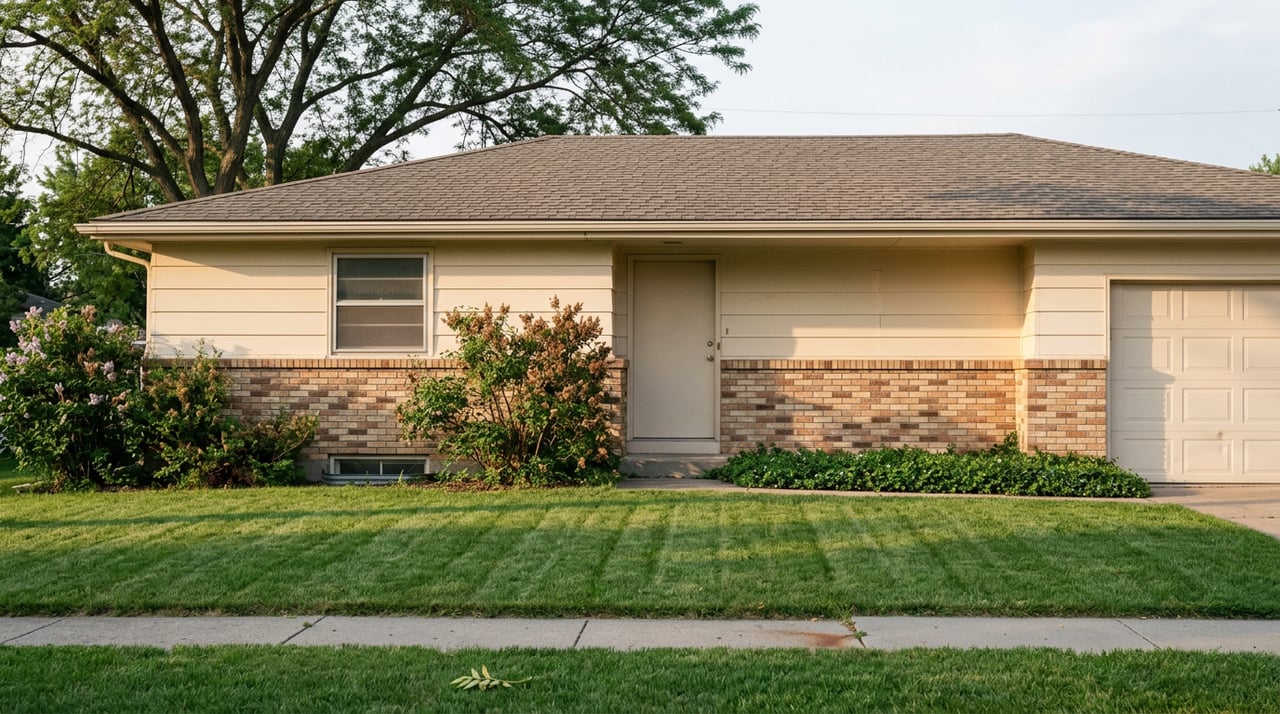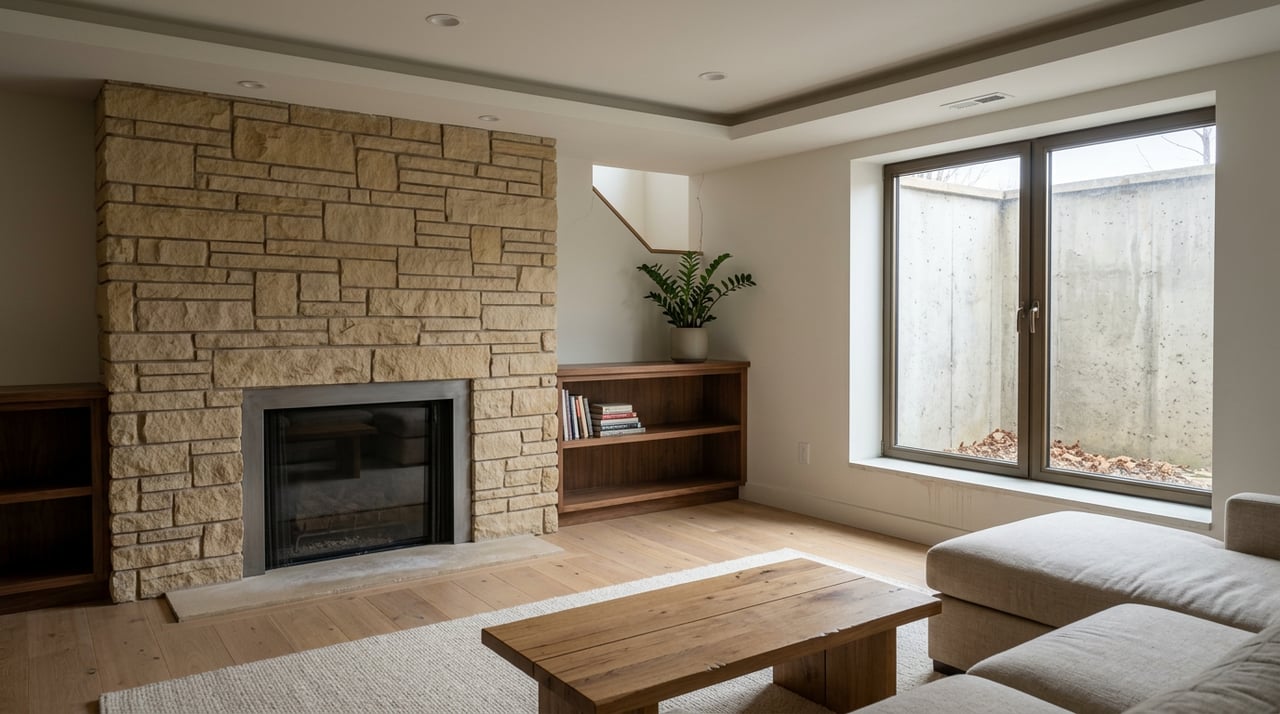
Walk into most listings in Broomfield built in the last thirty years and the basement is the selling point. Egress windows let in real daylight. There is a media room, sometimes a fourth bedroom, often a home office with the good desk already built in. It reads as bonus square footage, the kind of space that makes a well-built Broomfield house feel like it works harder than its price tag suggests.
What that same square footage does not announce is that it sits in the one part of the house closest to the ground, in a city where the ground itself is the issue. Broomfield falls entirely within the EPA's Radon Zone 1 classification, meaning predicted indoor radon levels across the county are expected to exceed the federal action threshold of 4 picocuries per liter. That fact alone would matter anywhere. In Broomfield, where finished basements are the norm rather than the exception, it changes how a buyer should actually use the inspection period.
A finished basement changes the exposure math
Radon is a byproduct of uranium decay in soil and rock, and it enters homes through foundation cracks and gaps around pipes. A basement used for storage is low-occupancy exposure. A basement converted into a bedroom, playroom, or daily home office is a different calculation entirely, because it combines the lowest, most soil-contacted level of the house with the most hours anyone spends in it. A family that finished their basement to gain living space may have unknowingly created the highest-exposure room in the home without changing a single thing about the air itself, since radon is colorless and odorless.
Colorado's standard contract language does not soften this. Every residential sales contract in the state now carries a bold-faced advisory stating that radon is a Class A human carcinogen and the leading cause of lung cancer in nonsmokers. That is not marketing language from a mitigation company. It is required text on the contract you sign.
What the 2023 law actually puts in your hands
Since August 7, 2023, Colorado law (SB23-206, now codified at C.R.S. 38-35.7-112) has required every residential seller's property disclosure to state whether the home has been tested, share the most recent test records, describe any concentrations detected, and disclose whether a mitigation system exists. Buyers have a legal right to know this history before closing, and sellers must provide a copy of the state health department's radon brochure alongside it.
Here is the part that gets missed: disclosure only covers what the seller knows and admits. If a home was never tested, there is nothing on file to disclose, and the box on the form gets checked "unknown" without anyone doing anything wrong. That silence is not the same as a clean result. It just means the buyer is the one who finds out first, and whether they find out during the inspection contingency or after closing determines how much leverage they have.
What testing actually costs against what it protects
The cost curve here is lopsided enough that skipping the test rarely makes financial sense once you compare it to what elevated levels mean for a Broomfield closing.
| Option | Typical cost | What it gets you |
|---|---|---|
| CDPHE-discounted long-term kit | A few dollars plus lab fees | A useful annual average for personal awareness, not standard for a transaction |
| Professional short-term test (continuous monitor, 48 hours) | Roughly $200 | A documented, tamper-resistant result that holds up in negotiation |
| Active mitigation system installation | Roughly $1,500 to $3,500 | A soil depressurization system that typically cuts exposure by 90 percent or more |
A test that costs a couple hundred dollars catching a reading that would otherwise sit invisible for years is not a hard trade to justify, especially against a mitigation cost that is well understood on both sides of a negotiation.
Where this pattern actually shows up
Broomfield's housing stock is unusually consistent for its size. The finished-basement pattern spans Anthem, McKay Landing, The Broadlands, the established Broomfield Heights core, and the Interlocken area, all built largely in that 1990s-to-2010s window when basement egress and daylight windows became standard. Many of these homes were built with a passive radon-ready rough-in, a capped stub of vent pipe already run through the slab, which makes converting to an active system a matter of adding a fan rather than cutting new penetrations.
One quirk works in a buyer's favor here. Broomfield operates as a single consolidated city and county rather than a patchwork of overlapping jurisdictions, so permit records for a passive rough-in or a fully installed mitigation system are generally straightforward to pull and verify. If a listing claims a system exists, that claim is checkable, not just a talking point on the disclosure form.
If you are comparing homes across our Broomfield neighborhood page, the era and construction style of the finished basement is worth asking about street by street, since a passive rough-in from the late 1990s behaves differently than one poured in the 2010s.
Once you have a number, you have three moves
A radon result above 4 pCi/L during the inspection period is one of the more straightforward items to negotiate in a Colorado contract, precisely because the fix has a known cost and a known outcome. Colorado's standard contract gives a buyer three levers once a finding comes back:
- Ask for a repair before closing. The seller installs or activates a mitigation system and provides a post-installation test showing the result below 4.0.
- Ask for a closing credit. The buyer takes responsibility for mitigation after closing, priced against the documented repair cost.
- Terminate under the inspection objection. If the finding is serious enough or the seller will not address it, the buyer can walk and recover earnest money.
Which lever makes sense depends on what else the inspection turned up. A radon reading paired with a clean structural report is usually a quick credit conversation. A radon reading paired with a structural concern or a suspected sewer line issue is a different conversation, and one where a structural engineer or sewer-scope specialist may need to weigh in before the objection deadline closes.
Timing the test so the number means something
Radon levels swing with the seasons, generally running higher in winter when homes are sealed tight and lower in summer when windows are open and cooling systems dilute indoor air. A short-term professional test run under closed-house conditions accounts for this by controlling the variables during the 48-hour window rather than depending on what season it happens to be.
The same logic applies after mitigation. A system installed and verified in July with windows cracked for a heat wave will not tell you what winter looks like. A post-mitigation retest done under closed-house winter conditions is the more honest confirmation that a system is holding the number down when radon naturally peaks.
One more thing worth knowing before you pick a tester: Colorado does not license home inspectors. That does not mean quality is inconsistent everywhere, but it does mean the burden falls on the buyer to confirm the person testing follows recognized measurement protocols and uses a calibrated continuous monitor rather than handing over a mail-in kit and calling it a day.
A few questions worth asking early
Does every home in Broomfield have elevated radon? No. Zone 1 is a predictive classification based on geology, not a guarantee that every individual home tests high. It does mean the odds favor testing rather than assuming.
The seller's disclosure says the home was never tested. Does that mean it's fine? Not necessarily. It means there is no history to share, not that the air is clean. Ordering your own test during the contingency period is the only way to know before you own the answer.
Is a passive rough-in the same as protection? No. A rough-in is a capped pipe stub with no fan running. It only reduces radon once activated and verified with a follow-up test.
Radon is not the kind of thing that should derail a good decision about a good home. It is the kind of thing that should be tested for, priced accurately, and negotiated calmly, the same way you would treat a roof or a furnace. If you are weighing a Broomfield home with a finished basement, or trying to figure out how a radon finding should shape your offer, Melissa Worth can walk through the inspection timeline with you before you are up against a deadline. Let's Connect.